By Sid Peddinti, Esq.

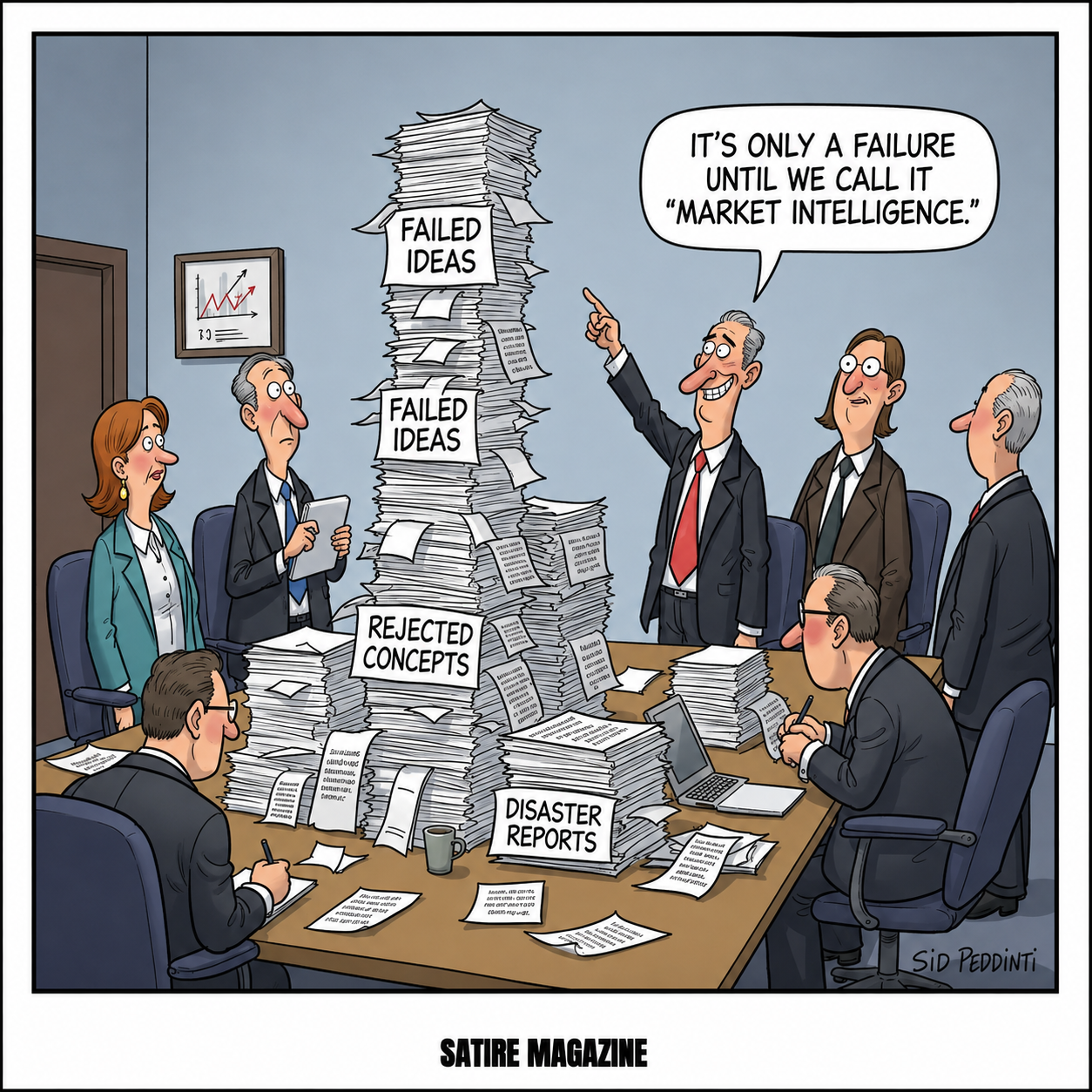
In the modern professional landscape—spanning law, medicine, finance, and entrepreneurship—the greatest risk is not failure itself, but the “silent failure” of investing months or years into a service, product, or program that the market never actually wanted. Traditional market research is often slow, expensive, and decoupled from real-world behavior. However, a more efficient alternative has emerged: the ability to test and validate ideas through publishing.
This methodology treats content not just as a marketing tool, but as a low-cost research and development (R&D) laboratory. By releasing “Minimum Viable Content” (MVC), professionals can gauge interest, identify specific pain points, and secure a pre-sold audience before a single dollar is spent on full-scale development. For the business owner or practitioner, this transition from “building in secret” to “validating in public” is the ultimate hedge against wasted capital (time, talent, and treasure).
⚡ Key Takeaways
- Publishing as R&D: Use content to gather real-world data on market demand before committing significant resources.
- Minimum Viable Content (MVC): Start with blog posts, newsletters, or social threads to test a concept’s resonance.
- Waitlists Over Surveys: Real validation comes from actions (emails, clicks, sign-ups), not just passive feedback.
- Risk Mitigation: High-trust professionals (lawyers, doctors, advisors) can pivot quickly based on engagement metrics without damaging their core brand.
- Pre-Sold Audience: Successful validation creates a community of early adopters ready to purchase the final offering.
Table of Contents
- The Shift from Traditional R&D to Content-Led Validation
- The Minimum Viable Content (MVC) Model
- Strategic Validation for High-Trust Professionals
- The 4-Step Validation Framework
- Data vs. Vanity: Metrics That Actually Signal Demand
- Platform Selection: Where to Test Your Ideas
- The Economics of the Pivot: Failing Fast and Cheap
- Comparison: Traditional Development vs. Publishing-Led Validation
- Frequently Asked Questions (FAQ)
- Call To Action & Next Steps
- References & Sources
The Shift from Traditional R&D to Content-Led Validation
Historically, launching a new service—whether it was a specialized legal department, a new financial planning package, or a medical wellness program—required significant upfront investment. One would hire consultants, conduct focus groups, and develop the infrastructure, only to find out post-launch that the market’s actual needs differed from the initial hypothesis.
Today, innovators can test and validate ideas through publishing. By sharing the core logic of a concept through articles, whitepapers, or social media, you invite the market to vote with their attention. If a lawyer writes an exhaustive piece on the legal implications of AI in healthcare and receives twenty inquiries from hospital administrators, the market has validated a specific need for a new practice area. If the post receives silence, the “failure” cost was merely the time it took to write the article, rather than the cost of hiring new associates and rebranding the firm. The next steps would be a strategic pivot, a shift in tone, a different format, or a different set of buyers – all attained through minimal allocation of resources.
This approach flips the script: you no longer build to find an audience; you build an audience to find what to build.
The Minimum Viable Content (MVC) Model
The concept of the Minimum Viable Product (MVP) is well-known in tech, but for service-based professionals and business owners, the Minimum Viable Content (MVC) is more applicable. An MVC is the smallest unit of published material that can effectively gauge market interest.
Types of MVCs
- The Atomic Post: A single, sharp insight shared on LinkedIn, Meta, or X (Twitter). This tests the “hook” of an idea.
- The Deep-Dive Newsletter: Platforms like Substack or Beehiiv allow you to see if readers are willing to exchange their contact information for your expertise. This is the first level of “skin in the game.”
- The Lead Magnet/Whitepaper: A downloadable PDF addressing a specific problem. If people download it, the problem is real.
- The Explainer Video: A short video breaking down a complex new service. High watch times indicate that the audience finds the solution relevant to their daily operations.
Strategic Validation for High-Trust Professionals
For lawyers, financial advisors, and medical practitioners, the stakes of “public testing” are different than for a typical software startup. Authority and reputation are the primary currencies.
1. For Legal Practitioners
Lawyers can validate new litigation strategies or compliance services by publishing “Client Alerts” or regulatory breakdowns. By tracking which topics garner the most clicks from existing clients, a firm can decide where to allocate its most expensive talent.
2. For Financial Advisors
Advisors can test interest in new asset classes (like digital assets or ESG investing) by hosting webinars or publishing “Market Outlook” pieces. The questions asked during these sessions are direct data points that reveal the client’s risk appetite and curiosity.
3. For Medical and Wellness Leaders
Medical practitioners can validate the demand for elective programs—such as specialized longevity protocols or nutrition plans—by sharing patient-education content. High engagement on a specific health topic serves as a green light to formalize a new clinical service line.
The 4-Step Validation Framework
To effectively test and validate ideas through publishing, one must follow a structured process to ensure the data collected is actionable.
Step 1: Formulate a Hypothesis
Identify a specific problem and a proposed solution.
- Hypothesis: “High-net-worth families are overwhelmed by the conflicting advice given by siloed advisors and would be willing to pay premium fees to someone who can connect their teams and fix the hidden gaps.”
Step 2: Publish a “Smoke Test”
Release a piece of content that outlines the solution as if it were already available or in development. Articles can cover topics such as:
- 5 Hidden Traps That Erode Your Wealth Despite Having A Lawyer, CPA, and Financial Advisor – and How To Fix Them Before It’s Too Late.
- Insurance Agents and Lawyers Never Speak. Here’s How Your Family Could Pay A Fortune Because They Could Not Get On One Call Together.
- What Is An AI-Powered Family Office And Why Business Owners With $3M – $10M Need To Set Up One In Order To Avoid 6-Figures In Probate And Death Taxes.
At the end of the content, include a “soft” call to action, such as a link to a survey, an application, a workshop, a community, or a calendar to speak with you.
These are real examples of how we built a “family office consulting firm” by launching highly targeted concepts through articles, newsletters, and social media posts.
Step 3: Analyze Qualitative and Quantitative Feedback
Look beyond the “Like” button.
- Qualitative: Are people asking specific questions? Are they sharing their own related problems in the comments?
- Quantitative: What is the click-through rate (CTR) on the waitlist link? How many people signed up for the newsletter based on this specific topic?
Step 4: Iterate or Pivot
If the response is overwhelming, proceed to the next stage of investment. If the response is tepid, analyze why. Was the problem not painful enough? Was the audience wrong? Or was the solution simply not compelling? Use this data to pivot the concept before any hard costs are incurred.
Data vs. Vanity: Metrics That Actually Signal Demand
Not all engagement is created equal. To test and validate ideas through publishing, you must distinguish between “vanity metrics” and “validation metrics.”
| Metric | Category | Meaning for Validation |
|---|---|---|
| Likes / Reactions | Vanity | Indicates general agreement, but zero commitment. |
| Comments / Questions | Qualitative | Reveals the “language” the market uses to describe their pain. |
| Shares / Reposts | High Signal | Indicates the content is valuable enough for someone to stake their own reputation on it. |
| Newsletter Sign-ups | Validation | A “micro-transaction” where the user pays with their data and attention. |
| Waitlist Conversions | Strong Validation | The highest indicator of intent to purchase. |
| Search Queries | Intent | If people find your content via specific search terms, you have identified an active market search behavior. |
Platform Selection: Where to Test Your Ideas
The choice of platform depends entirely on where your target decision-makers congregate.
- WordPress website: My recommendation is to set up a WordPress site – it allows you to build and share content across many platforms in 2-3 clicks. This also helps you “own” important keywords or IP that you are testing out – you want to own the first publishing rights to your content, so a stand-alone site to establish IP and publishing rights will be a smart move – especially if the concept actually works out. The last thing you want to face is an infringement notice for content that you created and developed before anyone else. Market testing is important, but so is protecting your original IP and ideas.
- LinkedIn: The premier site for B2B validation. If you are a lawyer, insurance agent, or consultant, LinkedIn’s professional demographic allows for direct feedback from peers and potential clients.
- Substack/Newsletters: Ideal for testing long-term interest. If a reader subscribes to a newsletter specifically about “The Future of Estate Planning,” they are signaling a deep, ongoing interest in that niche.
- Proprietary Blog (SEO): By publishing on your own website, you can use tools like Google Search Console to see what people are searching for. This is a passive but powerful way to test and validate ideas through publishing by seeing what questions your audience is asking Google.
- Industry-Specific Journals: For medical or scientific validation, publishing in trade journals or niche digital magazines can provide high-level peer feedback.
The Economics of the Pivot: Failing Fast and Cheap
In the traditional business model, a “pivot” often happens after a product has already failed in the market, leading to massive losses. In the publishing-led model, the pivot happens during the content phase.
Imagine a nonprofit leader who wants to launch a new community center. Instead of buying a building, they first publish a series of articles about the specific needs of the community (e.g., after-school tutoring vs. senior wellness). By observing which articles spark the most community advocacy and donation inquiries, the leader can pivot the center’s focus to match the community’s actual priorities.
This is the essence of “failing fast.” You discover that an idea lacks legs when the investment is only a few hours of writing, rather than a multi-year lease and a full staff.
Comparison: Traditional Development vs. Publishing-Led Validation
| Feature | Traditional Development | Publishing-Led Validation |
|---|---|---|
| Upfront Cost | High (Staff, R&D, Marketing) | Low (Time, Content Creation) |
| Speed to Market | Slow (Months or Years) | Fast (Days or Weeks) |
| Feedback Loop | Delayed (Post-Launch) | Instant (Real-time Engagement) |
| Risk Level | High (All-in on one idea) | Low (Multiple ideas tested simultaneously) |
| Audience Relationship | Transactional | Built on trust and authority |
| Primary Goal | Selling the product | Understanding the market |
Frequently Asked Questions (FAQ)
What if someone steals my idea because I published it?
This is a common concern among lawyers and innovators. However, in the modern economy, execution is the differentiator, not the idea itself. By publishing first, you claim the “authority” over the idea in the eyes of search engines, and even for trademark and copyright protection purposes. It’s important to have strong IP notices, use the © and ™ sign when testing ideas, and if you choose to register a trademark, you can use the ® sign once it is approved. These are IP protection laws that help you take down copycats and imposters if they steal your idea – but keep in mind that every situation is different.
How much content do I need to publish to validate an idea?
There is no magic number, but consistency is key. A single post might go viral by accident. Validation usually requires a series of related pieces (a “content cluster”) that consistently perform well and generate inquiries over 30 to 60 days.
Can I validate a physical product through publishing?
Yes. Many e-commerce brands start by publishing content about a lifestyle or a problem. Once they have a loyal following that engages with their content, they launch a product that solves the very problems they’ve been discussing.
Does this work for nonprofits?
Absolutely. Nonprofits can test and validate ideas through publishing by sharing “impact stories” or “vision papers.” If a particular initiative receives significantly more donations or volunteer sign-ups than others, the nonprofit knows where to focus its mission. We typically build out articles that dive deep into stories and examples of real impact – be it educational, charitable, or religious. Grant applications can point to specific stories and articles that are written to supplement grant applications.
What if my published idea gets zero engagement?
This is actually a successful test. It means the market has told you – for free – that your current framing or the idea itself is not a priority for them. You can now tweak the “hook” or move on to a new idea without having spent your budget.
The Next Steps
The era of guessing what your market wants is over. By learning how to test and validate ideas through publishing, you can transform your insights into a powerful engine for business growth and risk mitigation.
Start small: identify one new service or product concept you’ve been considering and write a detailed, high-value post about it today. Do that again over the course of 1-2 weeks, and if you want to expedite your research, spend $100 on paid media to test out the concept. For less than $150, you can validate an idea and even avoid disasters that may have run into the 5, 6, or even 7-figures.
Don’t be afraid to test new concepts and ideas. Once you learn how to do that for “free”, you can literally build a business with $0 up-front cost (minus $100 initial testing), secure customers who are ready to pay, and build the company without spending a fortune or pursuing the wrong initiatives.
I’d love to hear from you – do you use this strategy? What topics or offers would you like to test out? Leave a comment below.
Cheers,
Sid Peddinti
BA. LLB/JD. LLM.
References & Sources
- Market Validation Principles via Google AI Overview data.
- Minimum Viable Product (MVP) and Content Strategy research.
- Professional Service Innovation standards (LegalTech and FinTech).
- Search Engine Optimization (SEO) and Intent-based Marketing data.
Article Contributed By:
Sid Peddinti, Esq. – Lawyer, Researcher, Publisher, AI Innovator

Leave a Reply